Learn more about dog ticks – what can you do to
control this parasite.
Dog ticks are a common problem for all animals especially your dog as they are often out and about.
Ticks life cycle
Ticks have four stages of life: egg, larva, nymph and adult.
After the egg hatches the larva feeds on any suitable host, then develops into the larger nymph which also feeds on the host and finally develops into the adult, the female will often lay eggs after feeding, some ticks can lay up to 10,000 eggs at one time.
Habits of a tick
Dog ticks are one of the most efficient carriers of disease, as they attach firmly when sucking blood.
They feed slowly and may feed for several days if not removed. As the tick feeds on the blood it gets bigger and may look like a mole,it can get as big as a pea.
Ticks can only crawl they cannot run, fly or jump, ticks will wait on the tips of grass, weeds or small shrubs when a suitable host brushes against the plant they let go and climb on to the animal or person.
Prevention and Control
Keep your property tidy, lawns cut short, weeds cut out, shrubs trimmed, ticks stay low to the ground so they do not usually get up in to trees, areas adjacent to your property that have ticks apply a suitable insecticide to vegetation.
If you have a problem with tick infestation in the home or on the property you may need to call a professional pest control company.
Treat you dog and all other animals with a tick control product regularly. There are some flea treatments that provide tick control like Frontline Plus but only has control for the first month and flea control for 2 months.
Prevent Tick Bites
- Avoid tick infested areas
- Have your dog treated with a tick control product, like Frontline Plus or advantix (Advantix is toxic to cats so don't use this product on cats)
- When walking in the bush keep to a path if possible stay in the center and try to avoid contact with vegetation
- Check your dog at regular intervals for ticks
- Remove all tick promptly
- Check your dog for ticks after each outing during tick season
How to remove a Tick from your dog
|
Use a fine point tweezers or a special tick removal instruments.
|
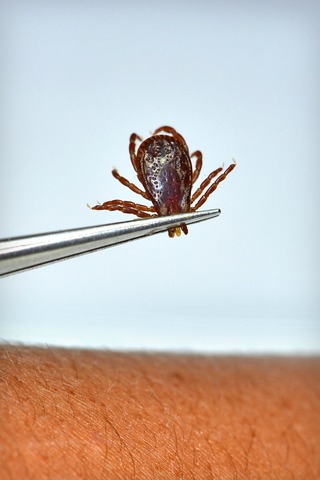 |
- After removing the tick, place it in a jar of alcohol to kill it. Ticks are NOT killed by flushing them down the toilet. You can also freeze the tick.
- Clean the bite wound with a disinfectant. If you want to, apply a small amount of a triple antibiotic ointment. It's not uncommon for a welt and skin reaction to occur. A little hydro-cortisone spray will help alleviate the irritation, but it may take a week or more for healing to take place. Some cases, the tick bite may permanently scar leaving a bald patch area. This skin irritation is due to a reaction to tick saliva.
- Do not use your fingers to remove or dispose of the tick. We do not want you in contact with a potentially disease-carrying tick. Do NOT squash the tick with your fingers. The contents of the tick can transmit disease.
- Wash your hands thoroughly
Using a Tick Removal Tool
The Tick Twister is the safest way to remove ticks without leaving mouthparts of the tick planted in the skin. Takes the tick away quickly and painlessly. Does not squeeze the tick and reducing the risk of infection. Designed by a Veterinarian.
The Tick Twister works with the two following principles:
Tick is gripped without compressing the tick's body
Tick is extracted by rotation and a slight upward motion, not by pulling.
With the Tick Twister you don't pull on the tick. Instead you rotate the tick and use a slight upward motion until the tick detaches after 2-3 rotations.
If your dog does get a tick bite and you are concerned put the tick in a Ziploc bag with damp cotton wool or paper towel , in case you need it identified, your local health department will assist with identification.
Types of Ticks
In the United States there is about 200 different tick species some can transmit diseases when they bite.
Two of the larger and more common ticks in USA are the Brown Dog Tick, American Dog Tick, there favourite host is the domestic dog.
Rocky Mountain Wood Tick as the name suggests is common in the Rocky Mountain area.
Groundhog Tick is found mainly in the New England states.
A very small tick called (deer tick) is known to carry Lyme disease which can be very serious if not treated promptly.
It depends on the area you live in as to the dog ticks present inquire from your vet, you need to be aware of any particular danger. For further information about ticks check out pest products.
Other pages of interest
Return from dog ticks to home page
The information given on this site,is compiled from our
knowledge and research and is designed to supplement
not replace your vets or other professionals advice.
Copyright 2019 All rights reserved
www.dachshund-owner-guide.com
Solo Build It!
 Subscribe To This Site